Porcini Mushrooms in Lunigiana
When the Woods Hide Small Treasures
There are days when the woods seem to have nothing to say. You walk among chestnuts and beeches, listen to your footsteps on the leaves, breathe in the scent of damp earth. Then a bend, a shaft of light, a brown shape emerging from the moss.
There it is.
The porcino needs no announcement. It sits there, quiet and a little plump, as if it were the most natural thing in the world. And in fact it is. It is we who, when we come across it, suddenly become children again.
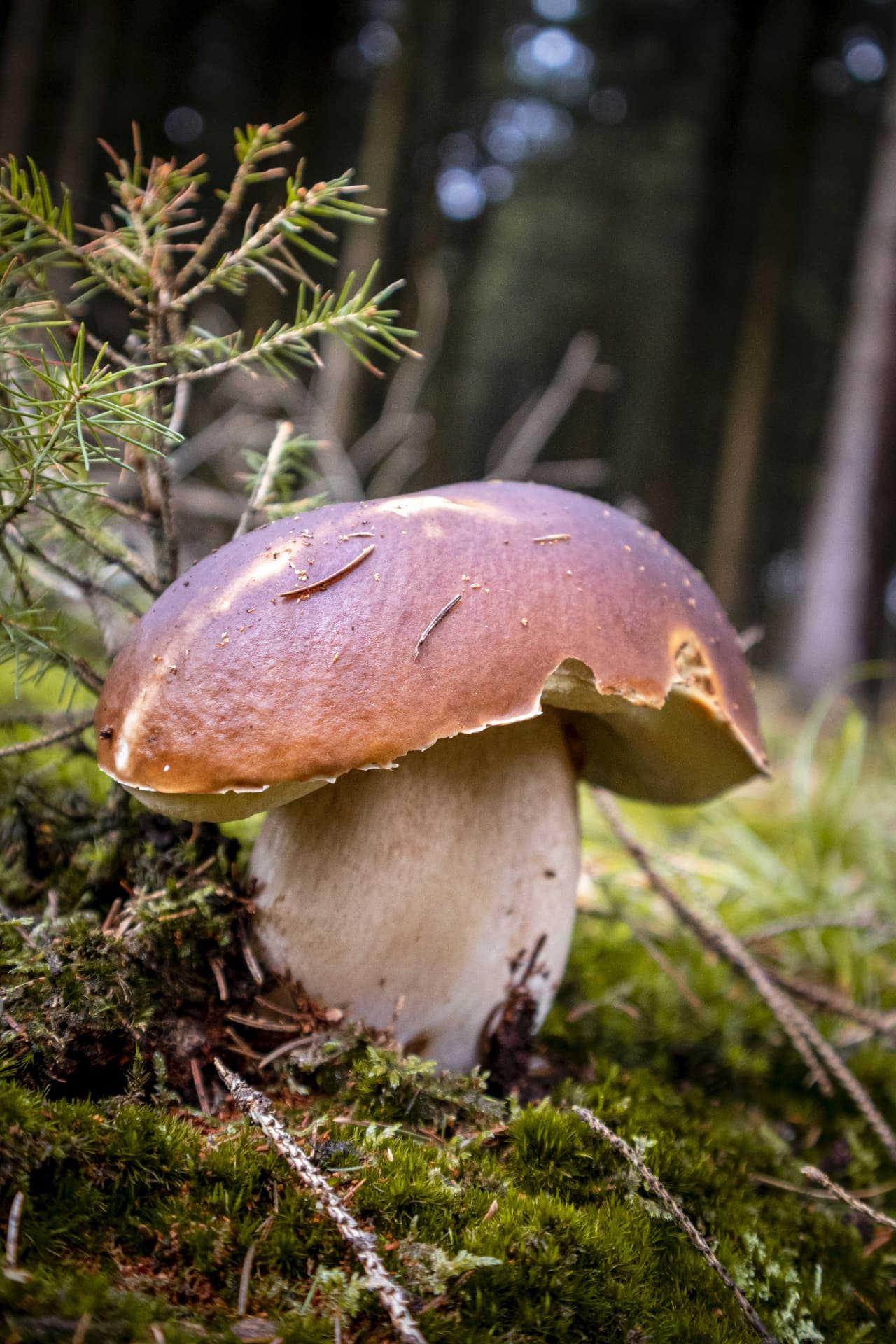
Porcini, Chestnuts and Border Mountains
Lunigiana is a land of woods and ancient chestnut groves, tucked between the Apennines and the Apuan Alps. Lunigiana World tells of little-frequented paths, centuries-old chestnut trees and natural landscapes that still keep the rhythm of rural communities. Here the produce of the undergrowth is part of the local culture, and the porcino has long found its way onto tables and into the area's traditional preparations.
The name porcino refers to several edible species of the genus *Boletus*. Truly recognising them, however, requires skill: colour, shape and a photograph are not enough. Toxic and even deadly species also live in the woods, and some can deceive an untrained eye.
That is why you will not find a lesson in mushroom identification here. You will find something more useful: the way to look for them with respect and have them checked before bringing them to the table.
The Season Does Not Wear a Watch
Porcini need a favourable balance of rain, humidity and temperature. They can appear from the warm season through to autumn, but no date can command them.
After rain, it is natural to prepare the basket and set off. The woods, however, may have different plans from ours. Sometimes they give generously, other times only a fine walk. Which, come to think of it, is not exactly a consolation prize.
Before setting out, check the weather and find out about trail conditions. Suitable footwear, clothing for possible changes in the weather, water and a charged phone are more important companions than any forager's secret.
Gathering Mushrooms in Tuscany: the Essential Rules
For amateur gathering in Tuscany you do not need to pass an exam, but outside your own municipality of residence a regional permit may be required. For those not resident in Tuscany, the tourist permit currently costs:
- 15 euros for one day;
- 40 euros for seven consecutive days;
- 100 euros for one year.
The payment receipt, completed with the reason for payment and the details required by the Region, constitutes the permit and must be carried together with an identity document. Payment methods and fees may change: before setting off, always check the official page of the Regione Toscana dedicated to mushroom gathering.
When gathering, remember that:
- the ordinary limit is 3 kg per person per day;
- gathering is allowed from one hour before sunrise to one hour after sunset;
- porcini with a cap smaller than 4 cm may not be gathered;
- rakes and tools that damage the soil, roots or mycelium are prohibited;
- you must use a rigid, ventilated container, not a plastic bag;
- gather only where access is permitted and gathering is not reserved.
In parks and protected areas further rules may apply. The woods around Camporaghena belong to a sensitive territory: before entering, always check the rules, any restrictions and the boundaries of the chosen area on the official channels of the Appennino Tosco-Emiliano National Park and the relevant authorities.
The Most Important Step Comes After Gathering
Every mushroom destined for the table should be checked by a mycologist from the health authority. Do not rely on photographs, apps, online comparisons or improvised reassurances. If in doubt, do not taste, do not give away and do not cook.
The Ispettorato Micologico of the Azienda USL Toscana nord ovest offers free checking of gathered mushrooms. For Lunigiana, the seasonal service is indicated at the Monti di Licciana Nardi office, in piazza Pieve 3. Days, times and opening periods may be updated: check them on the Azienda USL website or call 0187 462407 before going.
Take the whole harvest and have it checked as soon as possible. If after eating mushrooms you experience any symptoms, go immediately to the Emergency Department and take with you any leftovers from the meal and the mushrooms.
It is not distrust of the woods. It is respect for what we do not yet know.
Cerreto Alpi and Mushroom Culture
Beyond the ridge, on the Emilian side, Cerreto Alpi and Cerreto Laghi have built a recognisable bond with the mushroom. Here initiatives dedicated to understanding the woods take place, along with the World Mushroom Championship, promoted with the National Park and the community cooperative I Briganti di Cerreto: not just a search for porcini, but also training, respect for the environment and community life.
It can be a fine excursion for those wishing to discover another face of the Apennines. Remember, however, that Cerreto Alpi is in Emilia-Romagna: the Tuscan permit is not valid on the Reggio side. To gather you must check the regulations and purchase the card required by the Unione Montana dei Comuni dell'Appennino Reggiano for the current year.
The Championship dates and programme also change every year. Before setting off, check the websites of the Park, the Unione Montana and I Briganti di Cerreto.
Entering the Woods on Tiptoe
A porcino is not an object lying on the ground. It is the visible part of a much larger life, hidden beneath our footsteps. That is why you gather without digging, without disturbing the undergrowth and without leaving traces the woods have not asked for.
Take only what you can recognise, have checked and consume. Leave specimens that are too small, those that are spoiled and everything you do not know. You do not need to fill the basket to come back with something precious.
Sometimes you will return with a porcino. Sometimes with the scent of moss, a little mud on your shoes and a story to tell.
The woods, one way or another, always give something.
If You Want to Experience Autumn from Camporaghena
From the Viandanti, Artisti e Sognatori B&B you can set out to discover Lunigiana and its Apennine landscapes, respecting the season's rhythm and the rules of the places you pass through.
If you would like to know what the woods and the weather are like on those days, write to me before you leave. I will tell you what I see from Camporaghena, honestly. As for the porcini, no promises: they are free creatures and, evidently, they value their privacy highly.
Sources Consulted
- Regione Toscana, Raccolta funghi: disposizioni (Mushroom gathering: provisions), updated 17 August 2026.
- Azienda USL Toscana nord ovest, Controllare la commestibilità dei funghi (Checking mushroom edibility) and information sheet for the Ispettorato Micologico office in Lunigiana.
- Appennino Tosco-Emiliano National Park, information on the Campionato Mondiale del Fungo (World Mushroom Championship).
- Unione Montana dei Comuni dell'Appennino Reggiano, Tesserini per raccolta funghi 2026 (Mushroom gathering cards 2026).
- I Briganti di Cerreto, information on the Campionato Mondiale del Fungo and activities in Cerreto Alpi.
- Lunigiana World, Escursioni in Lunigiana (Excursions in Lunigiana) and Il Castagneto della Manganella.
Discover also
Rules, fees, service times and event programmes may change. Always check information on official websites before setting off.