Chestnuts in Camporaghena and Lunigiana
When autumn smells of firewood and sweet flour
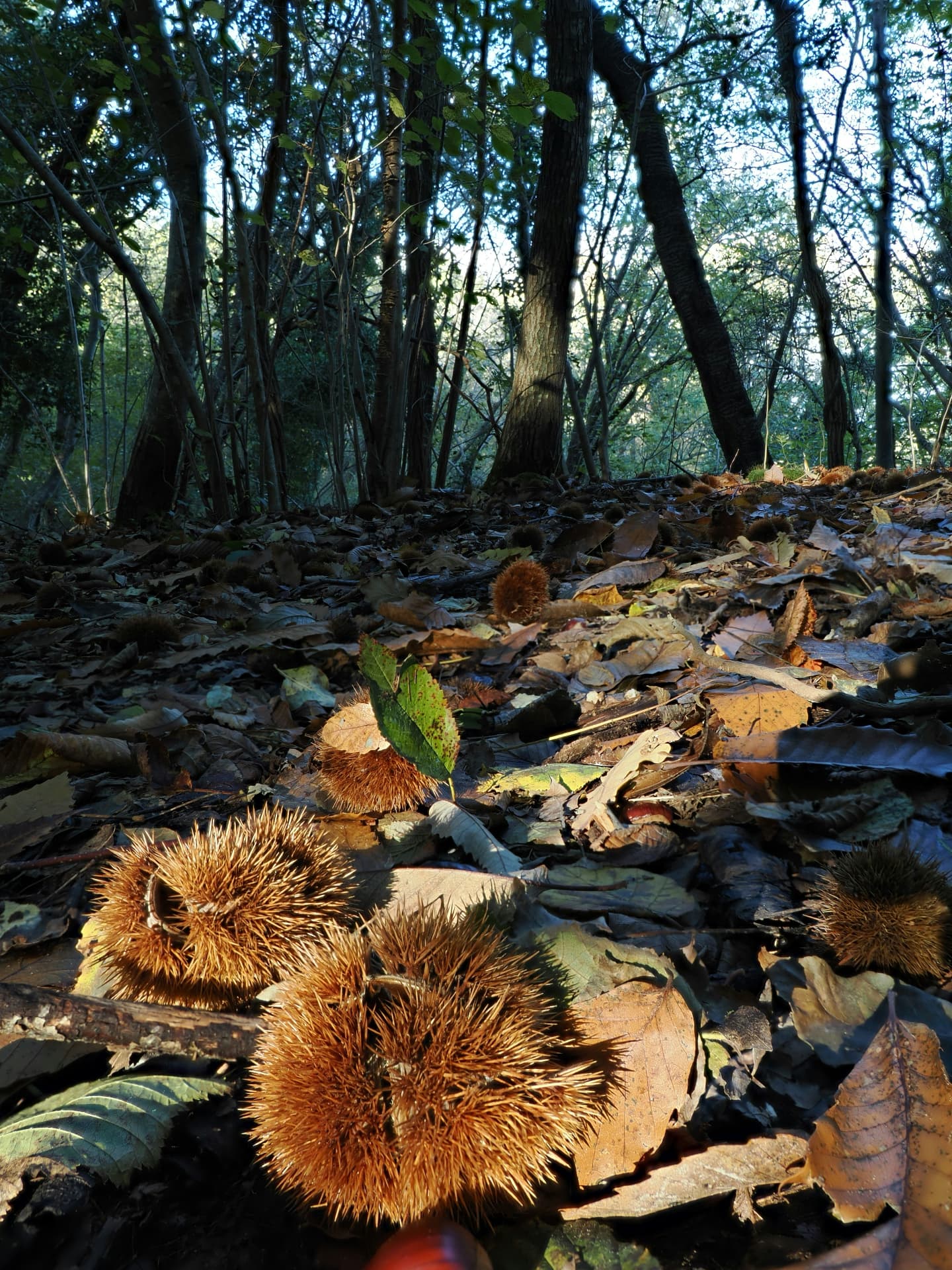
In Camporaghena, autumn arrives without making a sound. It settles on the rooftops, sets the woods around the village alight with colour and leaves open husks, copper leaves and glossy chestnuts along the paths.
For those who live in the mountains, however, the chestnut was never just a fruit to pick up on a walk. For centuries it meant flour, bread and nourishment through the hardest months. A precious reserve, kept safe in the woods when the woods were also a pantry, a workplace and daily life.
Camporaghena, in the heart of the Lunigiana mountains
Camporaghena sits at 831 metres, in the upper valley of the Taverone stream and within the Appennino Tosco-Emiliano National Park. It is a village in the municipality of Comano, one of the fourteen municipalities included in the production area of Farina di Castagne della Lunigiana DOP (PDO Chestnut Flour of Lunigiana).
Here the bond between the chestnut tree and the mountain belongs to a larger story, shared by many villages across Lunigiana. The chestnut was called the "bread tree" because its fruit, dried and ground, made it possible to prepare simple, substantial food even when wheat was scarce.
Today a chestnut picked up from the ground may seem a small thing. Yet it carries with it the work of entire seasons: tending the trees, gathering the harvest, keeping the fire alive and the patience of waiting.
From the husk to the gradile
The traditional production of flour begins with the autumn harvest. The PDO specification requires chestnuts to be gathered between 29 September and 15 December and to come from the approved local varieties. Bresciana, Carpanese and Rossola must together account for at least 70% of the product.
The chestnuts are then taken to the gradili, small stone buildings once found in villages and chestnut groves. The chestnuts are laid on a rack; on the lower floor a fire fed with local wood burns slowly. The heat and smoke rise unhurriedly and dry them for at least twenty-five days.
Tradition tells of fires kept alive for forty days and forty nights. People would keep watch around the gradile, working and talking. In this way, alongside the chestnuts, stories, words and memory were also preserved.
After drying, the fruit is cleaned, sorted and stone-ground by 30 January. To prevent heat from spoiling the product, the specification limits daily milling. The result is an ivory-cream flour, extremely fine to the touch and naturally sweet: not for nothing, in Lunigiana, it is simply called farina dolce — sweet flour.
Dishes that tell the story of the chestnut
Tasting chestnut cuisine means discovering recipes born from few ingredients and a great deal of ingenuity. Names and preparations can change from one valley or family to another: that, too, is part of the beauty of living food traditions.
Pattona or patona
A thin, small bread made with chestnut flour, water and salt; in eastern Lunigiana milk is also added. Traditionally the dough is spread over dried chestnut leaves, covered with more leaves and baked in a wood-fired oven. The scent of the leaves becomes part of the flavour.
It can be eaten on its own or with ricotta or pancetta. In Agnino di Fivizzano the pattona is so deeply tied to the village's identity that it has its own festival, first held in 1975.
Cian or necci
Thin chestnut-flour pancakes made with water and salt, traditionally cooked between two iron testi. They are eaten hot, often rolled around ricotta or a soft cheese. There are also pairings with cured meats or sweet creams: chestnut flour, it seems, gets along with almost everyone.
Castagnaccio
Perhaps the best-known chestnut dessert. To the base of sweet flour and water you can add, depending on the recipe, pine nuts, walnuts, raisins and rosemary. Here too there is no single version: every household seems to guard its own perfect balance.
Lasagne bastarde
Chestnut flour meets wheat flour in a dark-coloured pasta with a delicately sweet taste. Lasagne bastarde are a speciality of upper Lunigiana and pair well with savoury sauces that create a pleasing contrast.
Mondine and ballotte
Mondine are roasted chestnuts, cooked over the fire in a perforated pan. Ballotte are boiled chestnuts. They are the simplest preparations and perhaps for that very reason the ones most capable of bringing autumn back: hands around the warmth, shells on the table and someone always taking the last one while claiming they do not want it.
Among the area's other specialities you will find chestnut polenta and fritters, fresh pasta and Marocca di Casola, a traditional bread also made with chestnut flour.
Chestnut festivals, fairs and villages in celebration
Between September and November many villages in Lunigiana dedicate days to the chestnut. They are not just occasions to eat: they often bring back to the ancient villages the gestures of traditional processing, crafts, stories and family recipes.
Among the most representative events are:
- La Castagna Racconta ("The Chestnut Tells Its Story"), in the village of Licciana Nardi, with dishes such as pattone, mondine, cian and castagnacci and re-enactments of the traditional processing stages;
- the Castagnata nel borgo medievale di Filetto (Chestnut Festival in the medieval village of Filetto), traditionally held on Sundays in October;
- the Fiera d'Autunno e della Castagna (Autumn and Chestnut Fair) at Parco Fiera di Barbarasco, in the municipality of Tresana, dedicated to autumn produce and chestnut culture;
- La Castagna Comanina, in Comano, particularly close to Camporaghena;
- festivals and chestnut celebrations in the villages of Fivizzano, Casola in Lunigiana, Filattiera, Pontremoli, Villafranca in Lunigiana and Zeri;
- the Sagra della Pattona in Agnino, usually held towards the end of August and celebrating a use of sweet flour that precedes the harvest season.
Dates, venues and programmes change every year and may be subject to last-minute changes. Before setting off, check the updated calendar on Visit Lunigiana, Lunigiana World, the municipalities' websites and those of the organisers. A poster from last year, unfortunately, does not grow younger with the arrival of autumn.
Gathering chestnuts with respect
Seeing chestnuts on the ground does not automatically mean you can pick them up. Many chestnut groves are private property or cultivated land, and the fruit belongs to the landowner. In some places there may also be municipal regulations, civic uses, reserved periods or other restrictions.
Before gathering:
- check that access is permitted and ask the landowner's permission;
- enquire at the municipality about the rules applicable in the area;
- pick only fallen fruit, without breaking branches or striking the trees;
- do not use rakes or tools that damage the soil and roots;
- take a reasonable amount, leaving something for the woodland wildlife too;
- wear suitable footwear and check the weather and trail conditions.
Around Camporaghena we are in a protected mountain environment. The best way to move through it is lightly: without entering other people's land, without leaving litter and without turning a walk into a race for the fullest bag.
Experiencing autumn from Camporaghena
From the Viandanti, Artisti e Sognatori B&B you can set out to discover the villages, landscapes and flavours of Lunigiana. In autumn the journey also passes through an ivory-coloured flour, a lit gradile and a pattona still warm.
If you would like to know about the events taking place during your stay, write to me before you arrive. I will help you find the updated dates and the places where you can taste the local specialities.
The chestnuts in the woods, on the other hand, cannot be booked. They choose when to fall — and, all things considered, they are right to do so.
Sources consulted
- Consorzio di Tutela and Visit Lunigiana, Farina di Castagne della Lunigiana DOP.
- Regione Toscana, La Farina di Castagne della Lunigiana DOP.
- Visit Tuscany, La tradizione della castagna in Lunigiana: dal bosco alla farina DOP and content on the gradili.
- Visit Lunigiana, La Pattona, I Cian della Lunigiana and È tempo di castagne in Lunigiana!.
- Lunigiana World, Borgo di Camporaghena, La Castagna Racconta nel borgo di Licciana, Castagnata nel borgo di Filetto, Fiera d'Autunno e della Castagna nel Parco Fiera di Barbarasco and Agnino di Fivizzano: storia, tradizione e la delizia della Pattona in Lunigiana.
Discover also
Event programmes and local access and gathering rules may change. Always check information with organisers, municipalities and landowners before setting off.